

Ownership Types

Sole Ownership

Anyone aged 16 or over can apply to become a Registered Owner. Applicants aged 16–17 must provide a personal guarantee from a currently registered owner. All applicants are subject to identity and credit checks and must be approved by the British Horseracing Authority (BHA).


Golden Ace-11.3.25-49.jpg


Sole Owner

A sole owner has 100% ownership of a horse. The horse runs in the owner’s name and colours, and all costs and prize money belong solely to them.

Do I need to be a Registered Owner? Yes
How to Register: Apply online via the BHA or Weatherbys websites.



Night Breeze-28.4.26-2.jpg


Company Owner

A company can own a horse outright, with ownership held by the company and its shareholders. Companies may also form part of a partnership or syndicate. A registered agent must act on the company’s behalf.

Do I need to be a Registered Owner? Yes
How to Register: Apply online via the BHA or Weatherbys websites.


Shared Ownership

Shared ownership allows multiple people to split costs and enjoy the experience together. There are many different ways this can work:
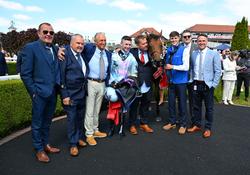

Roman Dragon - 08.05.2025aw2.jpg


Partnerships 

A partnership is for two or more Registered Owners sharing one or more horses. Ownership percentages, costs and prize money are divided according to each partner’s share.

Do I need to be a Registered Owner? Yes
How to Register: Apply online via the BHA or Weatherbys websites.



Ryan's Rocket 7  9-4-26.jpg


Syndicates

A syndicate allows members to own or lease shares in one or more horses in return for a financial contribution. Members typically share training, veterinary and travel costs and may receive a share of prize money, badges when the horse runs, sale proceeds and breeding rights, depending on the agreement.

Syndicates are managed by a syndicator, who oversees administration, finances and promotion.

Key Definitions

  • Syndicator: A person responsible for managing, promoting or administering a syndicate. Syndicators must be registered owners and hold a Racing Club/Syndicate Manager Licence.
  • Syndicate Member: Anyone holding a share in a syndicate-owned or leased horse.

Do I need to be a Registered Owner? Only the Syndicate Manager
How to find a syndicate: Visit the In The Paddock website

Microshares

Microshares make racehorse involvement more accessible by allowing hundreds of people to buy very small interests in a horse at low cost.

Members can still enjoy many ownership-style benefits, including:

  • Stable visits
  • Trainer updates
  • Ballots for raceday tickets

Do I need to be a Registered Owner? Only the SyndicateManager
How to find a Microshare Club: Visit the In The Paddock website



Doddie's Impact-1.4.23-2.jpg


Racing Clubs

Racing clubs provide a lower-cost introduction to racehorse involvement. Members do not own the horse but pay a membership fee for benefits such as:

  • Chance to have Owners’ badges when the horse runs
  • Stable visits and Social events
  • Updates from the trainer on the horse
  • Potential prize money shares

Key Definitions

  • Racing Club Manager: A person responsible for managing, promoting or administering a racing club. Managers must be registered owners and hold a Racing Club/Syndicate Manager licence.
  • Racing Club Member: Someone who pays for club benefits without acquiring ownership rights.

Do I need to be a Registered Owner? Only the Racing Club Manager
How to find a Racing Club: Visit the In The Paddock website


Shared Ownership Regulation

Code of Conduct

All Syndicates and Racing Clubs must comply with BHA Codes of Conduct. Promotions and advertising must accurately reflect the ownership structure.

Key Rules

  • Racing Clubs must not imply ownership rights. Terms such as “owner”, “ownership” or “share in a horse” should not be used.
  • Syndicates may advertise ownership shares, but must clearly explain the type of interest being purchased.

All syndicates and racing clubs must:

  1. Register ownership accurately with the BHA.
  2. Maintain up-to-date manager details.
  3. Keep member records available for BHA inspection.
  4. Ensure all members share an interest in all horses within the entity.
  5. Follow the relevant Code of Conduct.
  6. Ensure advertising aligns with BHA rules and ownership definitions.


Syndicator and Club Manager Licences

From 1 January 2026, all syndicate managers must hold a Racing Club/Syndicate Manager licence.

The licence is intended to strengthen consumer confidence and ensure compliance with:

  • Rules of Racing
  • Advertising standards
  • Financial sustainability
  • Business competence

Details of how to apply for the licence can be found here.

Licence Guidance notes

Racing Club / Syndicate Manager Licencing – Guidance Notes

A licence is required for any person or company with ultimate responsibility for the finances, promotion and/or management of a Syndicate or Racing Club that advertises publicly or for which they are paid to administer.

Applications for the license will be considered from any person or corporate body wishing to act as a Syndicator or Racing Club Manager - definitions of both are provided:

SYNDICATOR: Any person or corporate body, who has ultimate responsibility for the finances, promotion and/or management of a Syndicate.

RACING CLUB MANAGER: Any person or corporate body, who has ultimate responsibility for the finances, promotion and/or management of a Racing Club.

Applicants are required to demonstrate or confirm that:

  1. They have the competence and capability to manage and operate a Syndicate/Racing Club
  2. They understand and comply with all relevant requirements relating to the promotion and advertisement of Syndicates/Racing Clubs
  3. They understand and comply with the Rules of Racing, specifically as they relate to Syndicates and Racing Clubs
  4. The necessary financial resources are available to the Syndicate/Racing Club
  5. They are otherwise in all the circumstances suitable to hold a Licence (i.e. that they are ‘fit and proper’)

Applicants WHO HAVE managed Syndicates/Racing Clubs for three or more years will need to ensure they have access to:

1. Completion certificate from the Licence to manage Syndicates and Racing Clubs e-learning

2. A copy of a template Syndicate/Racing Club contract for each proposed business

3. The most recent accounts and/or balance sheets for your Syndicate/Racing Club business(s)

Applicants WHO HAVE NOT managed Syndicates/Racing Clubs for three or more years will need to ensure they have access to:

1. Completion certificate from the Licence to manage Syndicates and Racing Clubs e-learning

2. A copy of a template Syndicate/Racing Club contract for each proposed business

3. A copy of your business plan for the Syndicate/Racing Club business (including a projected cash flow for the next 12 months as a minimum)

4. A financial reference from your accountant or bank or a redacted image from your business account confirming a minimum of £15,000 in available capital

BHA Supporting Documents:
Full Guidance Notes can be found here
FAQs document can be found here
Shared Ownership Manual can be found here


Syndicate and Racing Club Agreements

The ROA provides template agreements for syndicates and racing clubs. PDF versions are available here, whilst editable versions can be downloaded in the Members’ Area.

Available templates include:

  • Syndicate Agreement (single horse)
  • Syndicate Agreement (multiple horses)
  • Racing Club Agreement

For affiliated organisations, visit the Racing Syndicates Association: www.racehorsesyndicates.org


Explore more 

Racehorse Syndicates: Key Considerations

Over 60% of racehorses trained in Britain are raced in some form of co-ownership. This helps share the costs and increase the fun of the experience.

The ROA understands that syndicates are a valuable introduction into ownership. To get the most from the experience we have come up with seven tips to consider before you join a syndicate:

  • Read the Syndicate agreement carefully, to ensure you are clear on all aspects of costs, factional interests, duration of the syndicate, liability and management. A FREE syndicate template is available on this page.
  • Weigh-up the pros and cons of the available options to match your expectations and situation.
  • Don’t be afraid to ask questions. Pre-arranged stable visits can be a very enjoyable aspect of ownership, so you may wish to check how often you would be welcome to visit.
  • Be clear on what you’ve entered into. Is the horse owned or leased? Will you receive a share of any prize-money won?
  • Check whether the horse you are involved in is insured (against all risks of mortality). Some owners choose not to insure, but members of syndicates can usually insure their proportion of ownership if they wish.
  • Establish the frequency and method you can expect to receive updates on the horse, and who your point of contact will be.
  • Ensure you have some form of third-party liability insurance cover. Owners may be vulnerable to claims even when their horse is in someone else’s possession. Members of the ROA receive £10m cover as part of their package of benefits. Read more here


Find a syndicate with In The Paddock

In The Paddock is a website designed to help discover the thrill of ownership. It offers a range of search functions to find UK-based shared racehorse ownership options to suit all pockets.

It is aimed at anyone considering getting involved in racehorse ownership for the first time and which showcases just how accessible, affordable and exciting it is to be part of the action.  

Visitors are able to search for racing clubs and syndicates to suit them using the search function which filters results by cost and payment terms, location, their jump or flat preference, as well as the average number of club members and the numbers of horses in training. They are then able to view the club or syndicate’s online profile where they can find out more about what is offered and get in touch with the racing manager directly.

For more information visit InThePaddock.co.uk


Have you considered Leasing?

Leasing allows individuals to experience racehorse ownership without purchasing the horse outright.

The lessee takes responsibility for running costs during the lease period, while the horse runs in their name and colours. Ownership returns to the legal owner when the lease ends.

Trainers will often have horses available to lease for a set period or may be able to point you in the direction of an owner/breeder with a suitable horse. You can find a trainer using the NTF’s online directory or the BHA’s interactive map.

 To lease a horse, you must first become a registered owner. The lease must then be registered with Weatherbys using an L1 form. Registration and annual renewal fees apply.

 It is important that an agreement is made between the lessor and lessee with regard to the details.

A written agreement should cover:

  • Lease duration
  • Prize money arrangements
  • Responsibility for veterinary decisions and costs - The level of detail included regarding veterinary requirements e.g. does the owner have the power of veto over certain treatments, who makes the decisions in the event that the Owner/Lessee isn’t contactable in an emergency/decisions regarding emergency surgery etc
  • Running and training decisions - Consider the influence that the owner/Lessee has over when/where the horse runs

It should be noted that this agreement is provided as a template, and may be altered to suit the particular requirements of the Lessee/Owner.